Change of guard at the Accreditation Commission

Marlène Jans succeeds Clemens Spoorenberg: on professionalism, ownership and the importance of a strong organizational culture.
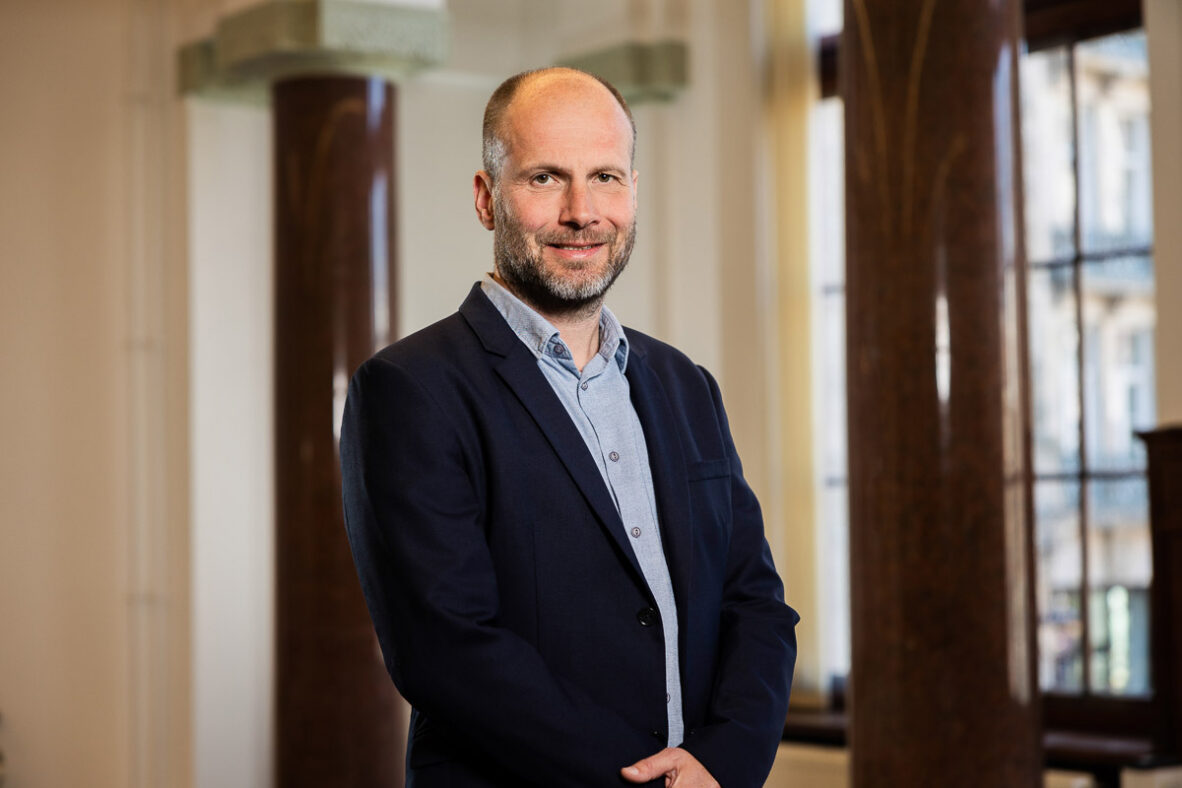
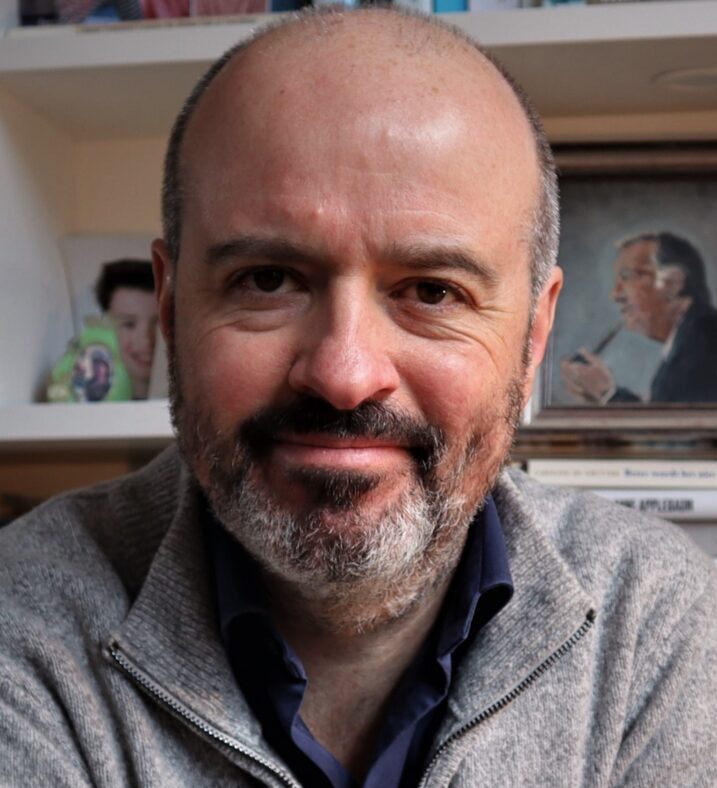
Clemens Spoorenberg was there more than 25 years ago when DSI was founded. From roles at NIBE-SVV, DSI advisory committees and European networks such as EBTN and EFPA, he saw the journey from self-regulation to a mature system recognized by the regulator. Now he hands over the baton to Marlène Jans, who takes on the new challenges with her expertise at the intersection of compliance, governance and behavior & culture.
Clemens, you’ve had several roles at DSI. Which period or role has stuck with you the most?
Clemens: Actually, I hesitate between two periods. The early period, at a time when there was hardly any supervision – the Stichting Toezicht Effectenverkeer was still in its infancy, the AFM did not yet exist – we as a sector worked on voluntary professional competence requirements for employees in the investment world. That was pure self-regulation, unique for that time. And what strikes me most in retrospect: we were already combining professional expertise with requirements for ethics, integrity and social skills. That was really progressive. That’s where the foundations were laid for everything that came after.
But the phase in which we translated the European ESMA guidelines into Dutch practice was also special. That’s where everything came together: my national experience, my European network through EFPA and EBTN, and the recognition that what we had built up in the Netherlands at DSI was quite special.
What appealed to you most about chairing the Accreditation Commission, Marlène?
 Marlène: “It is always nice to be able to work in a professional environment with a team of highly experienced specialists. With my expertise at the intersection of compliance, governance and behavior and culture, I can hopefully contribute an additional angle to this. DSI has evolved greatly since its inception. Financial stability and health are essential for everyone in our society, and ensuring the quality of employees is key to that stability.
In my own work, I have experienced firsthand how important it is to work with well-trained people – and how much damage clients can suffer from poorly trained or malfunctioning employees. After all, the client is always at an information disadvantage and therefore completely dependent on the quality of the professional. A lot can go wrong, and the consequences can be really big. Ensuring the quality of training is therefore of great importance to the industry. This is directly in line with the work of the AFM, which DSI has mandated to do so. I therefore consider it an honor to be able to contribute to this, and to succeed Clemens as chairman of the Accreditation Committee. He has played a major role within DSI and has contributed in a special way to the development of professional competence in the financial sector.”
Accreditation sometimes sounds technical, but you help determine what and how professionals learn. How have you experienced that responsibility, Clemens?
Clemens: For me, accreditation was never just about procedures or formats, but about trust. You as a commission provide the stamp of quality that determines what professionals learn and how they develop. That’s a big responsibility. I have always felt that as something honorable – you are at the knobs of professional culture formation. As a non-investment specialist, I always felt supported by the vast investment expertise of my fellow committee members who really know what the profession should entail. It is enormously motivating when you see that training and examination institutes share that ambition.
In the financial sector, the presence of knowledge of rules and laws alone is insufficient to do the “right thing. It is also about employee competencies, i.e. what is done in practice with the knowledge gained.
Accreditation may not be the most visible work, but it is defining. How do you view that, Marlène?
Marlène: Training programs for financial professionals are offered by various training institutions. It is important that those trainings meet specific requirements. This way the financial institution knows that the professional is well trained and qualified, the professional can demonstrate that he or she has the required qualifications, and the client can see that he or she is being served or advised at the correct or required level. I view training accreditation as an independent seal of approval demonstrating that training meets specific basic requirements. This is all the more important in a world that is rapidly changing, and where complexity is rapidly increasing.
Can you name a moment during your work for DSI when you thought: this is where we really make a difference for the industry, Clemens?
Clemens: Two moments stand out. The first was the introduction of the online periodic integrity test, the DSI PIT. Even before continuing education was commonplace, we already had a tool for professionals to periodically reflect on acting with integrity. There was discussion about it – people passed questions on to each other or did the test together – but looking back that was the lesson: integrity and ethical conduct must be discussed together, not ticked off a test on your own. It is a joint responsibility.
The second moment was when, based on my European involvement in the ESMA guidelines for professional competence, I had the opportunity to advise DSI on how to shape the system in the Netherlands. The approach DSI developed in the Netherlands was sanctioned by the AFM as an excellent way to meet those European requirements. I told that to my European network with barely concealed pride.
With all the developments around AI and new ways of learning, how do you see the future of learning and professionalism in the financial sector, Marlène?
Marlène: I expect that AI is going to help tremendously, but should only serve as support for the employee. It is crucial that the employee himself understands very well what steps need to be taken why in, say, an investment advice or for a financial planning, and that he can oversee the impact of the result well. He or she remains in the lead, it’s all about the “bigger picture. That knowledge must remain, the human in the loop remains essential. This also implies that high demands must be made on the qualifications and competencies of the employee. Teaching methods should be well aligned with this.
This also provides new opportunities for learning, creating different training offerings and making cases more current and challenging. I see dealing with AI as an important part of the training program, and we should not wait too long to do that. In the context of “human in the loop” and the use of AI, the importance of ethical awareness and the moral compass is going to carry more weight than it does now, as far as I am concerned. Blind reliance on AI is and will remain a major pitfall as far as I am concerned; independent and autonomous thinking remains required.
What do you think people often fail to see about the work of the Accreditation Commission, Clemens?
 Clemens: How thorough and careful the work is. The committee does not superficially assess whether an exam is “right” – we look at whether the learning outcomes are tested in a meaningful way, whether updates really add something, whether updated modules such as recently the integrity module are in line with what the industry needs. This is always done based on solid preparation by the DSI advisory committees and after consultation with organizations we accredit.
What do you think makes an education really relevant to someone who works in the field every day, Marlène?
Marlène: Good training helps to get a good overview and understanding of the subject matter, it shows the broader picture, the “why” behind a question or dilemma. At the same time, good training also goes into detail about the nuances that can make the difference between good and bad service. In good training, you also engage in a conversation with the other participants and the instructor about where and how you can take ownership of the work you do and its consequences. This is not about running away from the consequences, but practicing your craft in a mature way, and learning together from any mistakes you make.
Hereby I would like to thank the (former) directors of DSI: Kees Oosterholt, Dick Vis, Jerry Brouwer and now Floris Mreijen and all their staff (especially Nana Asante, Marin Schrijen and Mark van der Lecq).
From your own work experience, where in practice did you see the difference between “taking an education” and being truly skilled, Clemens?
Clemens: You can do an education passively. Professionalism is active – it’s the combination of professional expertise, acting with integrity and good social skills, and you have to constantly maintain those. Hence DSI Continuing Professional Education. DSI has always understood that registration is not an end point, but an ongoing promise to the industry.
From your own career: where have you personally noticed how important good training is, Marlène?
Marlène: For me, the trainings I took provided a tremendous enrichment and deepening of knowledge and insights; they helped me to better understand the larger structures and the “why” behind many structures and dilemmas, making possible solutions more readily apparent and better substantiated.
I have experienced up close how great the damage can be when financial professionals put on too big a pair of pants, and do not begin a responsible job properly trained. It can take a long time for damaging patterns to become apparent, and repair is then often no longer possible (properly). This is very damaging, not only to the financial institution and its reputation, but also to the customer. And no employee ultimately benefits from not being well prepared; it contributes to self-confidence and thus job satisfaction.
How have you been able to put your experience and perspective to concrete use within the committee, Clemens?
 Clemens: It was certainly an advantage that, as a former board member of a training and examination organization, I had gained a lot of knowledge about the functioning of the organizations applying for accreditation at DSI. In addition substantively, including through my involvement with the ESMA guidelines, I understood the European context behind the requirements we assessed in the Netherlands. That gave perspective in discussions about attainment levels and exam content.
But perhaps most of all as a connector: I knew the history of DSI from the inside, knew why certain choices had been made, and was able to monitor that continuity while the committee also innovated – with the ALM register and the new integrity module as great examples.
From your experience, what will you consciously bring to the committee to make the committee ready for these new challenges, Marlène?
Marlène: In addition to the training program, also look at the quality of the training organization itself. If a training program is accredited, but the institute itself turns out not to have the desired robust and sound organization, this can still affect the quality of the training programs in practice. Then the accreditation ‘at the front’ still does not have the desired and necessary effect.
In the financial sector, the presence of knowledge of rules and laws alone is insufficient to do the “right thing. It is also about employee competencies, i.e. what is done in practice with the knowledge gained. And how the risk culture of financial institutions is strengthened and monitored. I have seen many times in practice how organizational culture affects employee behavior – and vice versa. Employee behavior can be a very big risk, but also a huge “asset,” a strong control measure. In the committee, I would like to discuss how we can (have) attention built into the training courses for these behavioral and cultural components. And how the trainees already learn in the trainings that they should develop ‘ownership’ for the result of their work. (The importance of a strong organizational culture was also the reason why I founded the Behavior & Culture Knowledge Table for the VCO – Association for Compliance Professionals – in 2016).
If you had to sum up the work of the Accreditation Commission in one sentence, Clemens?
Clemens: The Accreditation Commission monitors not only the quality of knowledge, but also the heart of the professional: integrity, ethics and responsibility – the true foundations of professional competence.
Suppose you look back in a few years: when can you say that this presidency was successful for you, Marlène?
Marlène: If we, as a committee, have been able to contribute to the further strengthening of the courses and thus to the safeguarding of the quality and robustness of the financial sector. And also – not unimportantly – if we have been able to work as a team in a constructive and pleasant setting, with room for everyone’s input. For me, it’s all about the sum of everyone’s contribution; ‘1+1 = 3’.

Thank you to Clemens Spoorenberg: over 25 years guide in professionalism
With the departure of Clemens Spoorenberg as chairman of the Accreditation Committee, we at DSI say goodbye to a figurehead from the very beginning. Clemens was there more than a quarter of a century ago when DSI was founded. From the early days of self-regulation to today’s mature system: Clemens was our constant factor and connector.
Clemens, on behalf of all of DSI – and also personally – I want to thank you immensely for your tireless efforts and expertise over the past decades.
For you, professionalism was never about simply checking off procedures or dry knowledge. You were a pioneer in the field of ethics and integrity. With the introduction of the DSI PIT you showed early on that a moral compass is the real foundation of our profession. Thanks to your strong network at EFPA and EBTN, you also helped to flawlessly translate the European ESMA guidelines into Dutch practice. Something that we as DSI still reap the benefits of every day and can rightly be proud of. As chairman of the Accreditation Committee, you always guarded this stamp of quality with great care and a keen eye for practice.
At the same time, I warmly welcome Marlène Jans as the new Chair of the Accreditation Commission. I am greatly looking forward to our collaboration to further strengthen the quality and robustness of the sector together.
Floris Mreijen
Director-director DSI