Take responsibility
Take responsibility for your own behavior and that of those around you. Scandals in the financial sector show that the industry’s reputation is fragile. Professionals who are aware of their own actions help restore confidence in the industry. Personal responsibility for ethical behavior is essential.

DSI core principles in practice
What can you learn from this DSI-2018-05 ruling by the DSI Disciplinary Committee?
A certified manager of a financial company was instructed by the Board of Directors to execute a large transaction. There was discussion within the organization about this transaction because there were indications that confidential information may have been involved. Nevertheless, the Board of Directors decided to go ahead.
The manager was faced with a choice: should he follow the order or further investigate the potential risks? He chose to execute the transaction, assuming the Board had already made the ethical consideration.
However, the Disciplinary Committee ruled that the manager himself had a responsibility in this. As a senior professional, he should have signaled that the situation posed an integrity risk. He should have discussed this and, if necessary, called in compliance. Blindly trusting the decision of higher-ups was not enough.
Do not blindly trust the decisions of others, but dare to take responsibility yourself.
What does this mean to you?
Even if a decision is made by management, your own responsibility remains. Do you see a potential integrity risk? Ask questions, discuss it within your team or involve compliance. By acting proactively, you avoid unintentionally becoming involved in an ethical dilemma.
DSI Core Principles
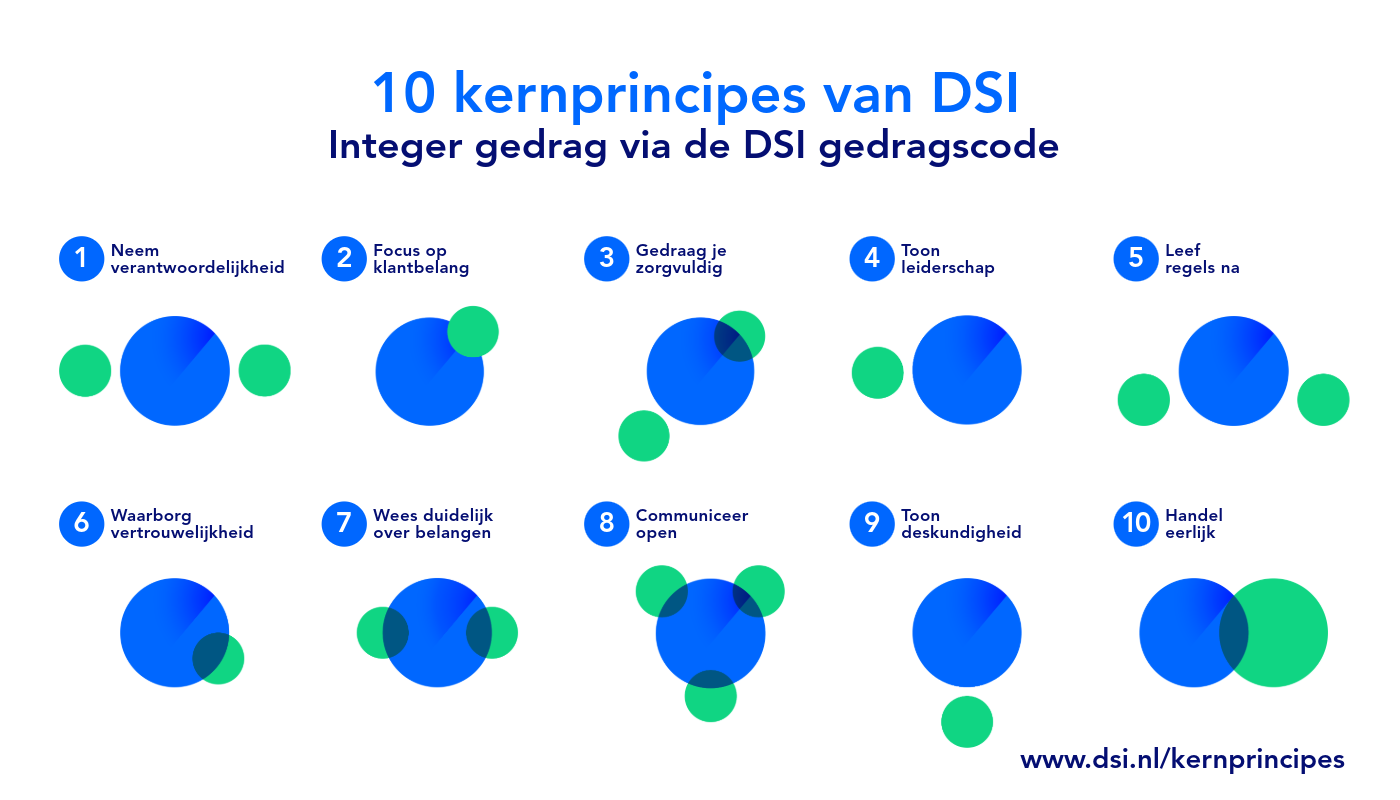
At DSI, ten core principles are central to the essence of our Code of Conduct. They offer financial professionals guidance on how to act with integrity on a daily basis and strengthen trust in the sector. Every DSI certified professional commits to these principles so that together we contribute to a transparent and honest financial sector.